Chatham Financial leverages OpenAI models to automate capital markets workflows
TL;DR
Chatham Financial announced that it is using OpenAI's Codex and GPT‑5.6 models to automate trade‑validation workflows and power its new capital‑markets operating system, Chatham Onyx, reducing manual review time from about 30 minutes to under 4 minutes and enabling firm‑wide, auditable AI‑assisted tools.
Reengineering Trade Validation with Codex
Outcome: The Process Zero initiative rebuilt the trade‑validation workflow to focus on essential inputs, human judgment points, and AI support.
Implementation: Using Codex, Chatham created an application that automatically gathers transaction evidence, compares key terms, and flags discrepancies.
Result: Early measurements show the tool cuts review time from ~30 minutes to <4 minutes while maintaining auditability.
Next steps: The firm will extend the app to more trade types and increase automation, always validating performance against experienced reviewers.
“In early measurement, the application reduced review from approximately 30 minutes to under 4 minutes. Just as important, we are validating its performance against real transactions and experienced reviewers before we expand automation.” – Alex Nordlinger, Co‑head of Chatham’s AI Advisory practice
Scaling Employee‑Built Applications with OpenAI
Outcome: Employees now routinely use ChatGPT and Codex for research, analysis, drafting, and software development, turning internal expertise into client‑facing AI tools.
Platform: Chatham Vibes, an internal low‑code platform, lets staff build applications that run on GPT‑5.6 Terra by default, with an optional upgrade to GPT‑5.6 Sol per app configuration.
Use cases: Applications automate review of maturing‑cap trades, generate pricing workbooks, produce fixed‑income rate sheets, create hedging dashboards, and review trade confirmations.
Human role: Advisors provide market context, apply judgment, and decide which AI‑generated output reaches the client.
“We are not approaching AI simply as a faster way to run every process. With OpenAI, we can start with the outcome we want, identify where judgment matters, and design the best way to deliver it using the capabilities now available.” – Matt Henry, CEO, Chatham Financial
Building Chatham Onyx with Codex and OpenAI Models
Outcome: Onyx unifies assets, debt, and derivatives data in a governed environment where AI can be applied without losing traceability.
Development workflow: Codex assists teams throughout planning, coding, testing, documentation, and review, accelerating feature delivery while preserving accuracy, security, and accountability.
Model stack: The platform routes simple analysis and non‑production testing to cost‑effective models (GPT‑5.4, GPT‑4.1) and reserves GPT‑5.6 Sol/Terra for complex, high‑accuracy tasks.
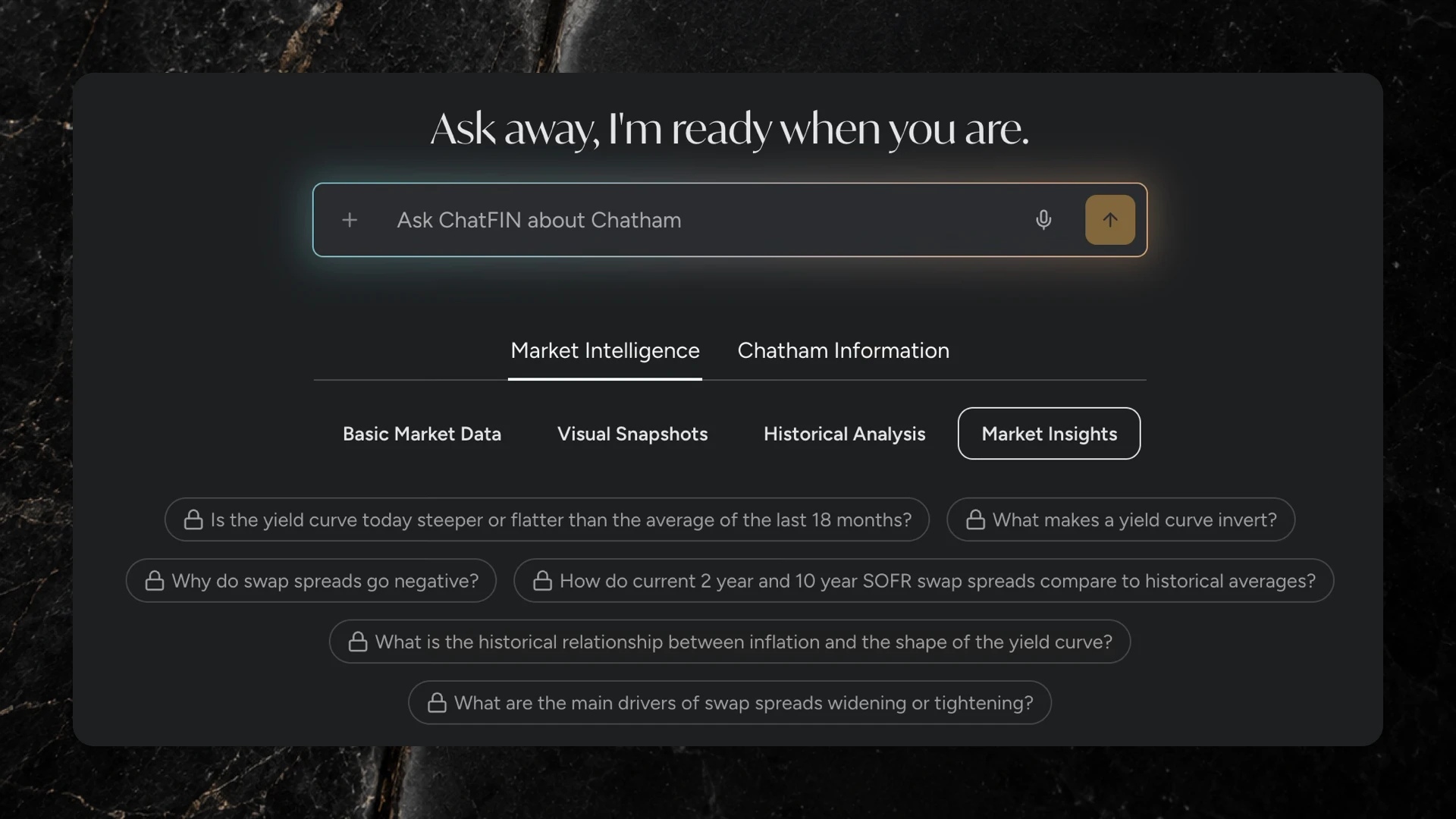
Example feature – ChatFIN: Summarizes historical market patterns, explains portfolio composition, and links to relevant legal documents for debt, derivatives, and leases.
“Codex is helping our teams turn product vision into working capabilities more quickly, while our standards for accuracy, security, and accountability remain the same.” – John DeGuenther, CTO, Chatham Financial
Creating More Capacity for Expert Work
Outcome: By automating structured comparisons, evidence organization, and exception identification, OpenAI models free advisors to focus on interpretation, complex case management, and client interaction.
Future roadmap: Expand trade‑validation automation to additional products, continue refining Vibes‑built applications, and leverage Codex for new Onyx capabilities.
“Our constraint has never been expertise. It is the hours our experts spend getting to the point where they can apply it. OpenAI is helping us take those hours back, and the further we go, the more time our experts can spend applying their judgment where it creates the most value for clients.” – Mike Noonan, Co‑Chief Operating Officer, Chatham Financial
Implications for the Capital‑Markets Industry
Speed and auditability: Demonstrated reductions in manual review time show that AI can accelerate compliance‑heavy processes without sacrificing traceability.
Governance model: Chatham’s Process Zero framework—defining minimal inputs, judgment points, and AI roles—offers a replicable blueprint for other firms seeking regulated AI adoption.
Model selection strategy: Routing tasks to the most cost‑effective model while reserving the latest, most accurate models for high‑impact work illustrates a pragmatic approach to managing LLM expenses at scale.
These developments suggest that AI‑augmented capital‑markets platforms can achieve both operational efficiency and the rigorous oversight demanded by regulators and clients.